Engineer Program
Program upgrade skill di bidang engineering, dari dasar hingga mahir.
Spesial Program
Program khusus melalui platform mitra resmi dokter mekanik academy seperti Udemy, Prakerja, dan Kampus Merdeka.

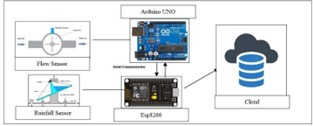
This project focuses on developing an IoT-based flood monitoring system designed to provide real-time information to communities near rivers. The system comprises key components, including a rainfall sensor to measure rainfall intensity, a flow meter to gauge water flow rate, and a NodeMCU that facilitates communication with an Arduino Uno for data processing.
Data collected from these sensors is transmitted via WiFi and stored in the cloud for easy access. The system features a web application that displays flood risk information, enabling residents to take necessary precautions. The benefits of this project include enhancing community awareness of flood risks, supporting disaster mitigation efforts, and aligning with Sustainable Development Goals (SDGs).
Overall, the IoT-based flood monitoring system is a vital tool for improving disaster preparedness and resilience in Indonesian communities, providing timely information to minimize flood-related losses and fostering collaboration among stakeholders for a safer environment.
This project aims to develop an IoT-based flood monitoring system that provides real-time information to communities living near rivers. By utilizing sensor technology, this system can detect rainfall and water flow, delivering crucial data to help anticipate flood risks.
Rainfall Sensor
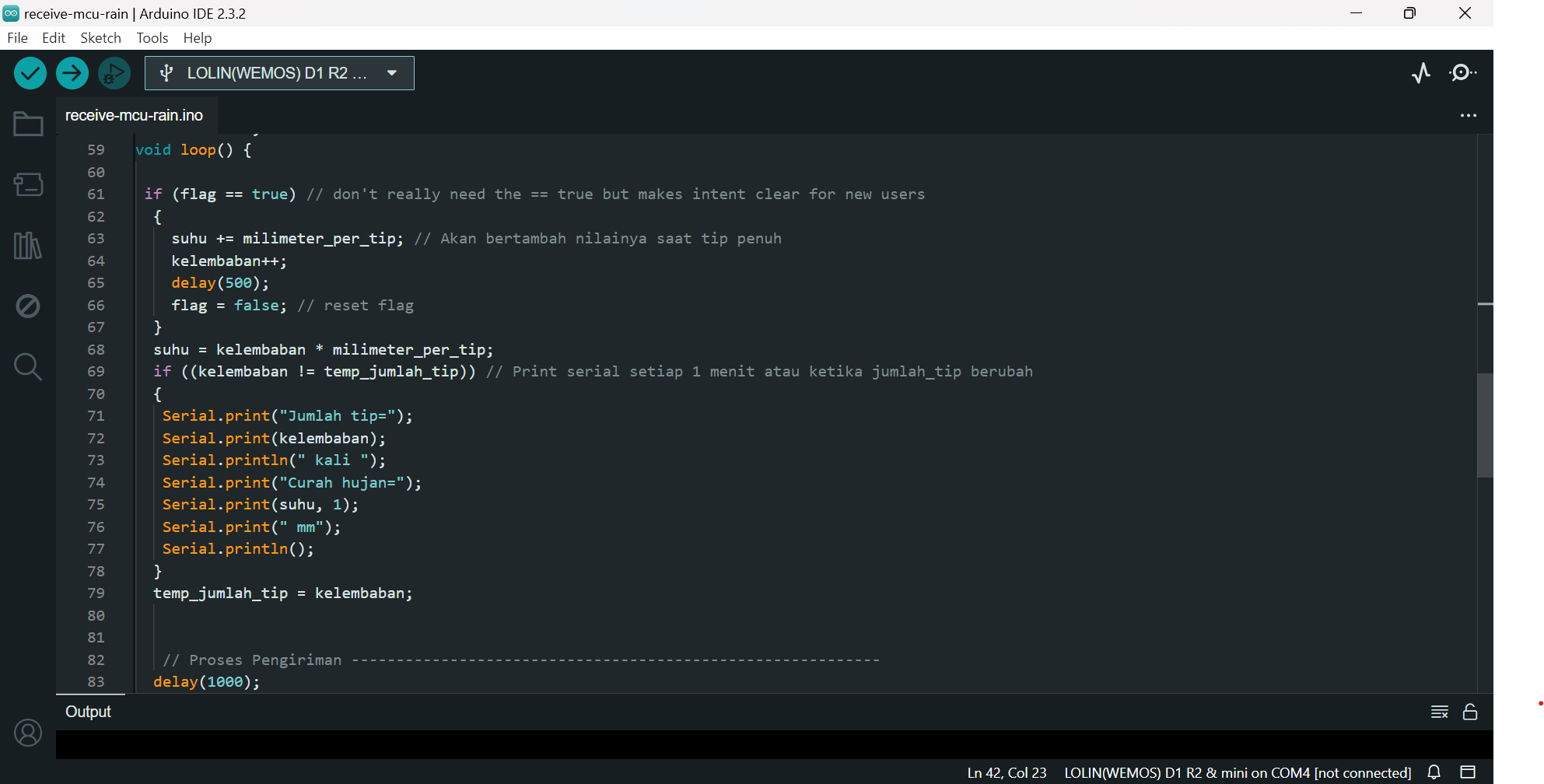
Measures rainfall intensity by counting the number of "tips" to determine the rainfall in millimeters.
Flow Meter
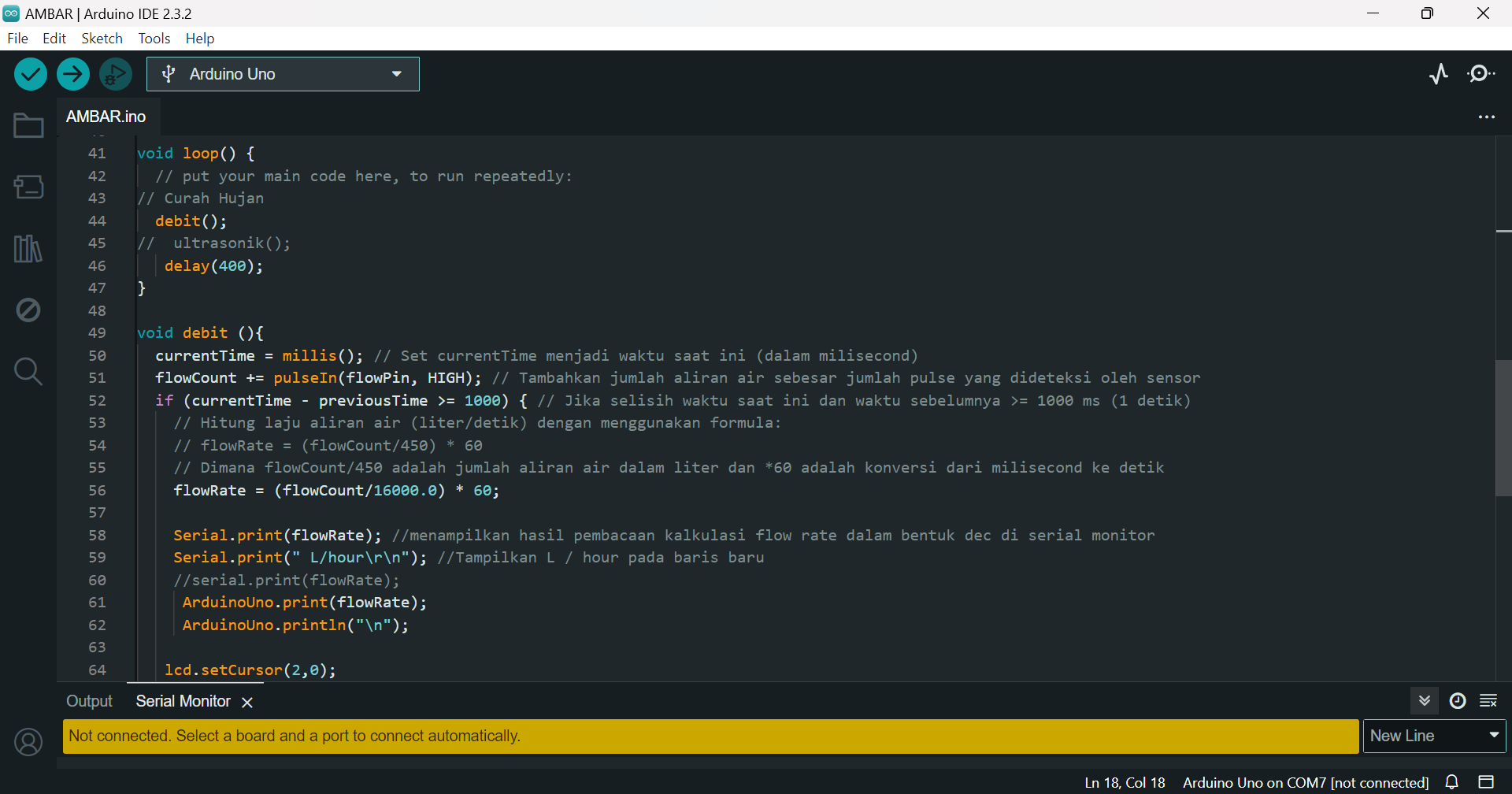
Measures water flow rate in liters per hour using a flow meter sensor that reads pulses from the water flow.
NodeMCU and Arduino Uno
NodeMCU communicates with Arduino Uno via serial communication using SoftwareSerial to process data from the sensors.
WiFi and HTTP Request
Sensor data is transmitted to the server via a WiFi connection using the HTTP protocol and stored in the cloud for easy access.
LCD Display
Displays water flow information on an I2C LCD screen to provide real-time data visualization.
Rainfall Measurement:
The rainfall sensor detects "tips" that occur, and the data is converted to millimeters to calculate total rainfall.
Water Flow Measurement:
The flow meter sensor calculates the water flow rate based on the pulses detected and sends the results via serial communication to the NodeMCU.
WiFi Connection and Data Transmission:
NodeMCU connects to a configured WiFi network and sends rainfall and flow rate data to the server using HTTP GET requests.
The project is expected to produce:
The development of this IoT-based flood monitoring system is a crucial step in addressing the flood challenges in Indonesia. By providing fast and accurate information access, this project aims not only to minimize flood-related losses but also to raise community awareness of existing risks. The implementation of this technology is anticipated to serve as a model for other monitoring systems, fostering collaboration among students, communities, and stakeholders to create a safer and more sustainable environment. Through ongoing research and innovation, we can mitigate disaster impacts and enhance community resilience to climate change.
0 Orang Menyukai Karya Ini